Repeatability is one of the most important factors in paint and coating testing. Seemingly minor variables, such as application speed, the pressure applied to the applicator or the film thickness produced, can lead to significant differences in results. Automating sample preparation helps to reduce these variations and improve the reliability of the tests.
Why might two laboratories obtain different results when using the same paint?
This situation is more common than it might seem.
Two laboratories may use the same paint, the same applicator and even follow the same test procedure, yet obtain different results for parameters such as:
- Gloss.
- Adhesion.
- Drying time.
- Chemical resistance.
- Washability.
- Colour.
- Mechanical strength.
In many cases, the difference lies not in the paint being analysed, but in the way the sample has been prepared.
The quality of a test depends directly on the quality and uniformity of the applied film.
What does repeatability mean in a test?
Repeatability is the ability to obtain similar results when the same test is carried out several times under the same conditions.
In the field of coatings, this means that two panels prepared with the same paint should yield equivalent results if the application process has been properly controlled.
When repeatability is low, it is difficult to determine whether the differences observed actually stem from the formulation or from variations introduced during the test.
Film application: one of the main sources of error
Many laboratory tests begin with a common step: the preparation of a film of paint, varnish, ink or coating on a test panel.
Although this may seem like a simple operation, it is one of the stages that has the greatest influence on subsequent results.
During manual application, variations may occur in:
- The speed at which the applicator moves.
- The pressure exerted on the application system.
- The amount of product deposited.
- The uniformity of the film.
- The final thickness achieved.
These small differences can significantly affect the results obtained in later stages of the test.
How film thickness influences the results
Film thickness is one of the most critical variables in the quality control of coatings.
A difference of just a few tens of micrometres can alter parameters such as:
| Property evaluated | Influence on thickness |
| Drying time | It can increase or decrease significantly |
| Gloss | It affects the surface finish |
| Adhesion | It may alter the behaviour of the coating |
| Washability | Modifies the wear resistance |
| Chemical resistance | It affects the final level of protection |
| Colour | It can result in visible differences |
For this reason, many test standards require uniform sample preparation to ensure the validity of the results.
The challenge of reducing inter-operator variability
Even when the procedure is clearly defined, each operator applies a slightly different force, speed and technique.
This human variability may be acceptable for certain tasks, but it poses a limitation when seeking to:
- Comparing formulations.
- Validating new products.
- Carrying out quality controls.
- Verifying regulatory compliance.
- Share results between different laboratories.
The greater the operator’s influence, the lower the ability to reproduce the results obtained.
Automation: a solution for improving consistency
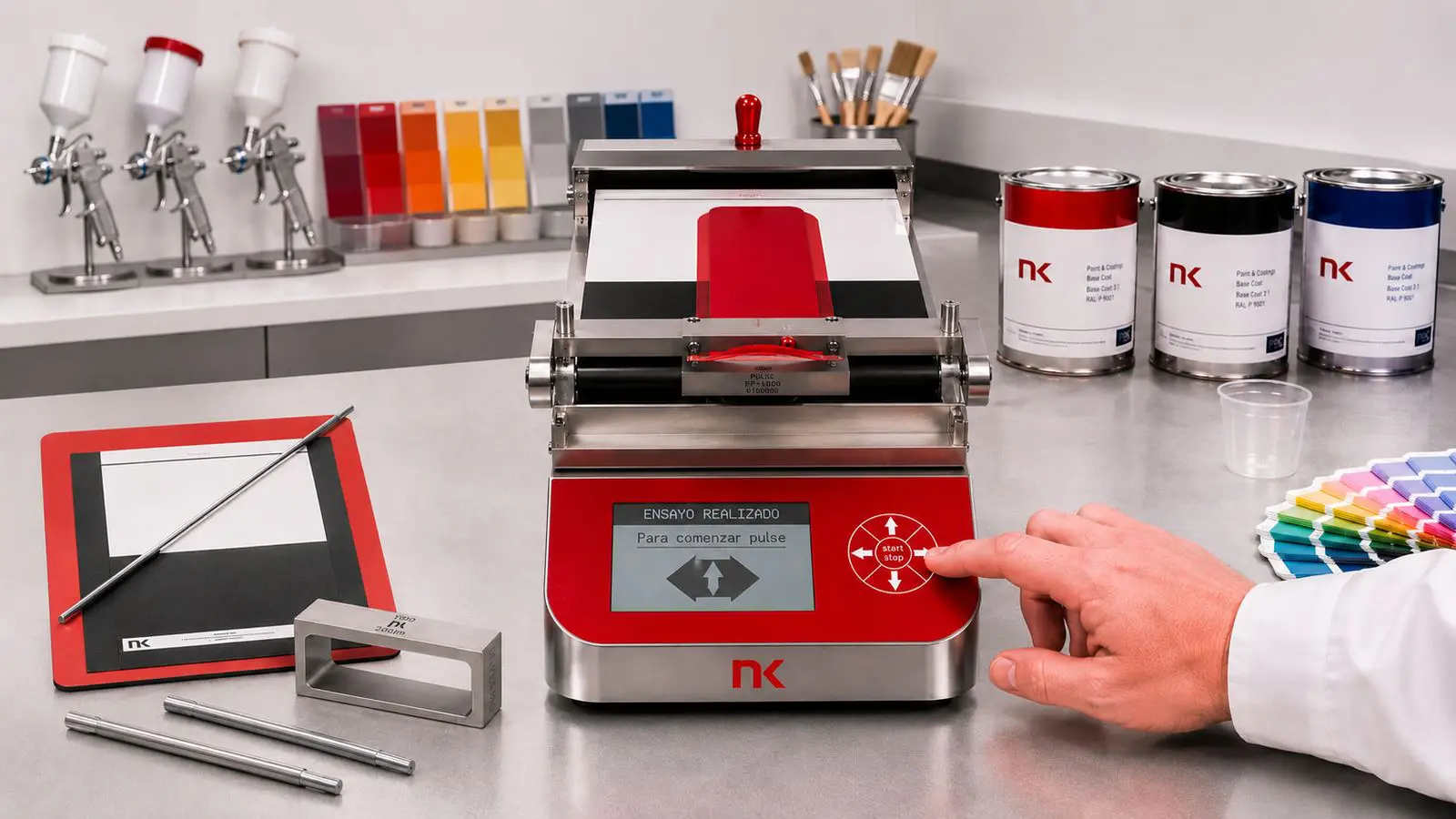
Automating the application process allows for the control of variables that would otherwise depend on manual intervention.
An automatic applicator maintains constant parameters such as:
- Application speed.
- Travel distance.
- Test conditions.
- Repeatability of movement.
- Uniformity of the film produced.
This helps to ensure that any differences observed during the tests are attributable to the product being analysed and not to the sample preparation process.
APLITEK: designed to improve the repeatability of tests
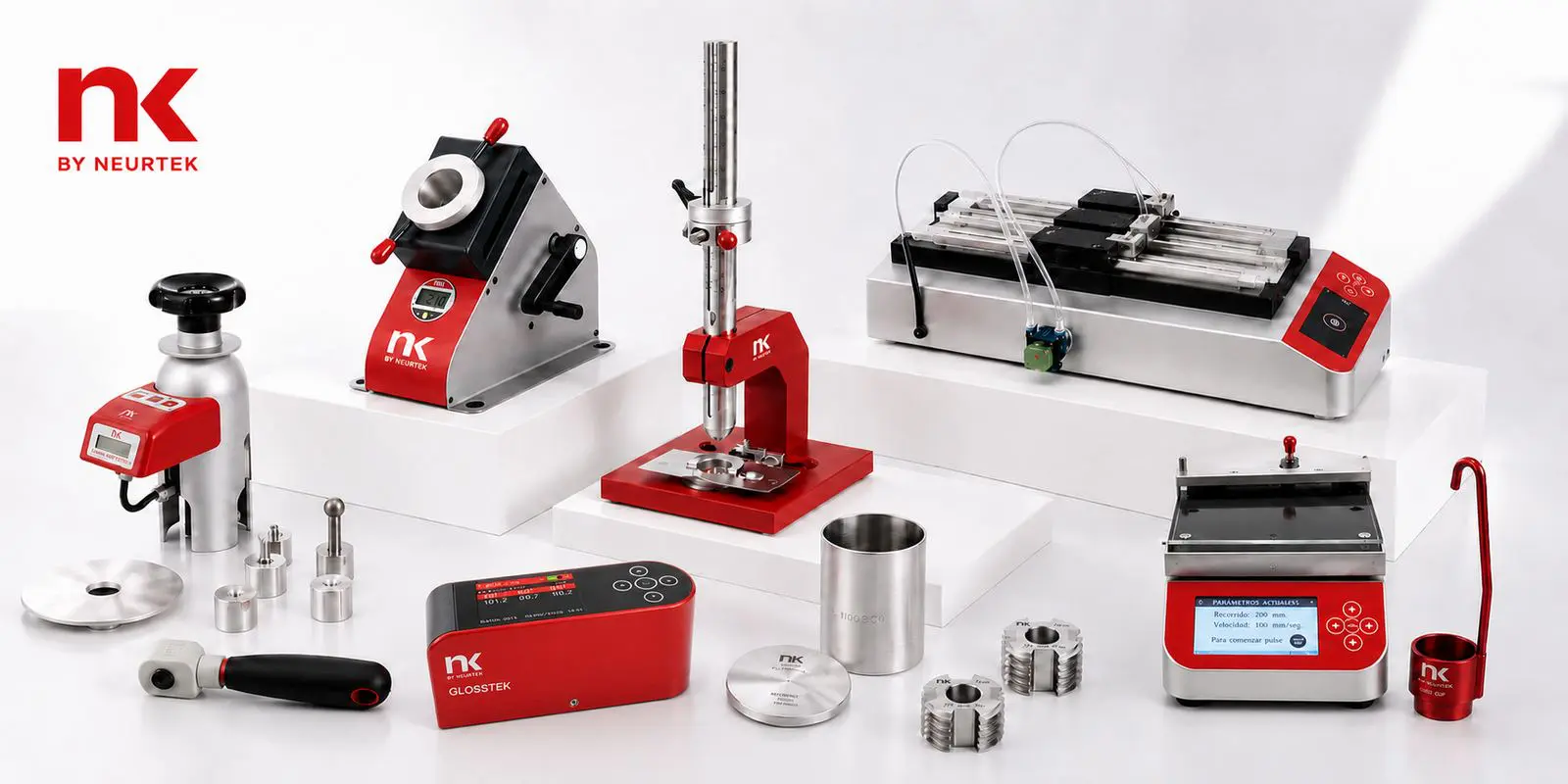
With the aim of reducing the variability associated with manual sample preparation, NK by NEURTEK has developed the APLITEK range of automatic applicators.
This equipment enables the production of uniform and reproducible films for a wide variety of tests relating to paints, inks, varnishes, adhesives and other coatings.
Using them helps to:
- Improve repeatability between samples.
- Reduce operator influence.
- Increase the reliability of tests.
- Optimise laboratory work.
- Facilitate comparisons between formulations.
Which laboratories benefit most from automation?
Automatic applicators are particularly useful in:
- Paint and coatings manufacturers. To compare formulations and carry out consistent quality control.
- R&D laboratories. When it is necessary to evaluate subtle differences between product developments.
- Ink and varnish manufacturers. Where film uniformity is critical for performance evaluation.
- Universities and technology centres. To ensure reproducible and comparable tests between researchers.
- Quality control laboratories. Which process a large number of samples and need to minimise operational variability.
- Repeatability, quality and confidence in results. Repeatability is not merely a technical requirement. It is the basis for making reliable decisions.
If a sample is not prepared consistently, any subsequent results may be compromised.
For this reason, an increasing number of laboratories are adopting automated dispensing systems that allow for better control of critical assay variables and increase confidence in the results obtained.