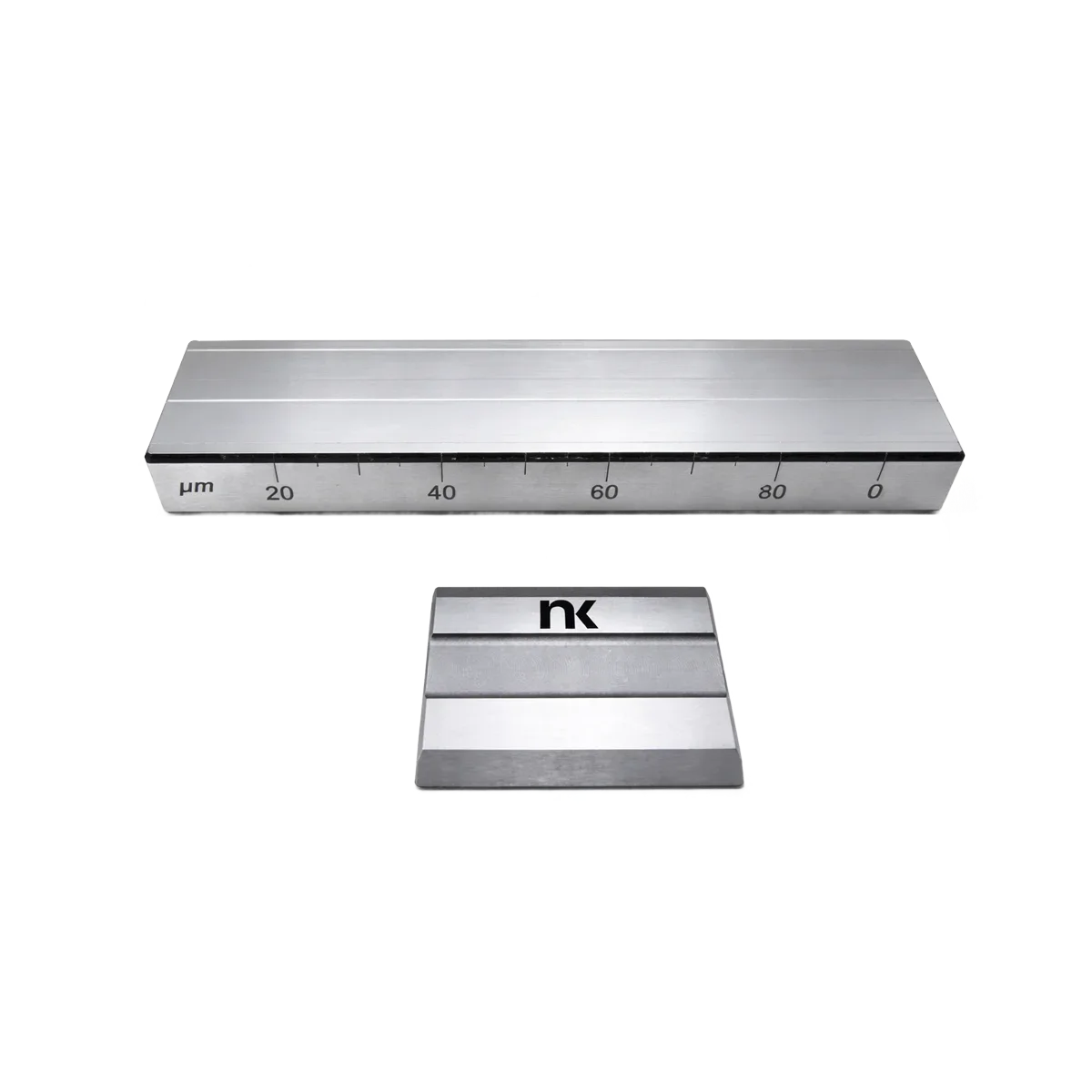
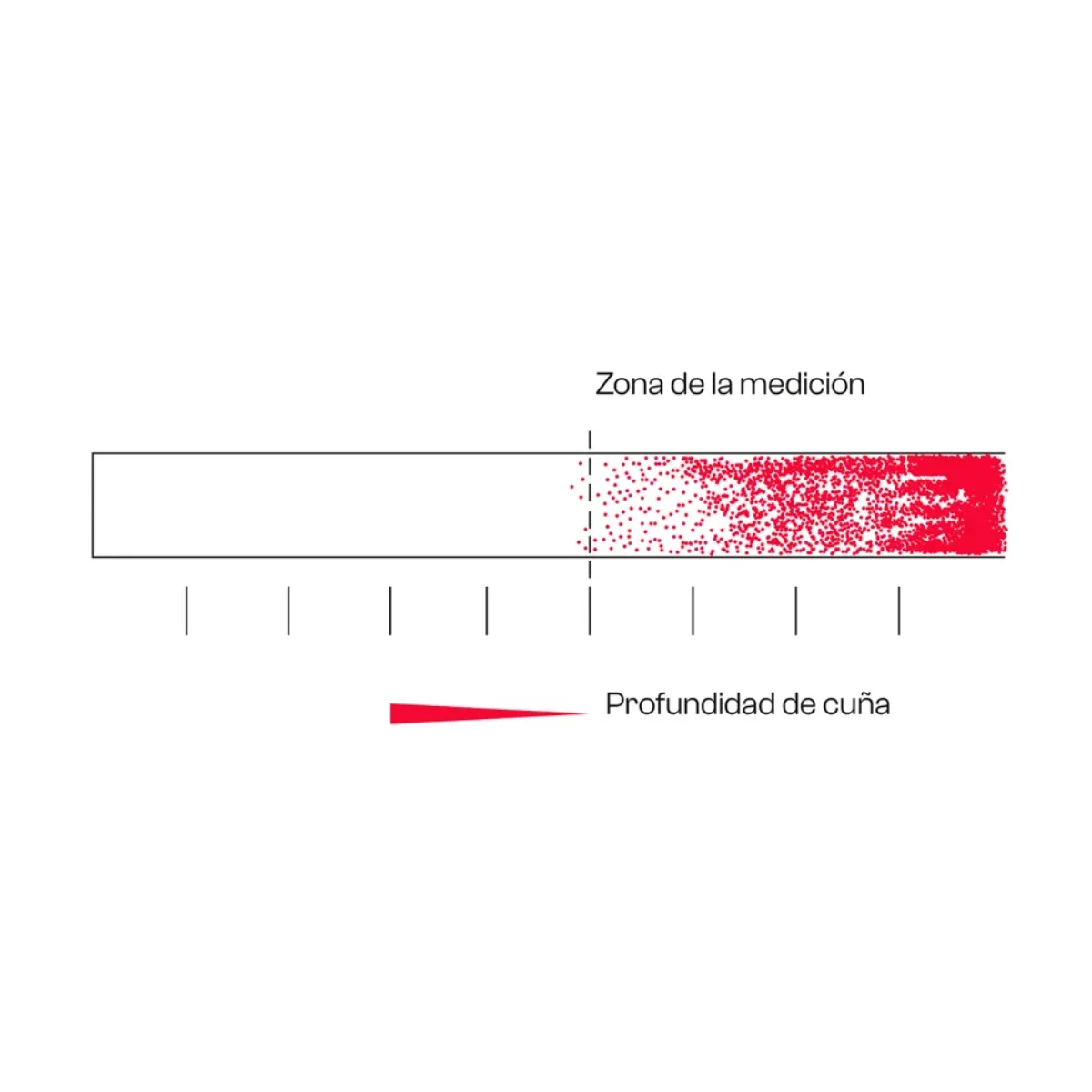
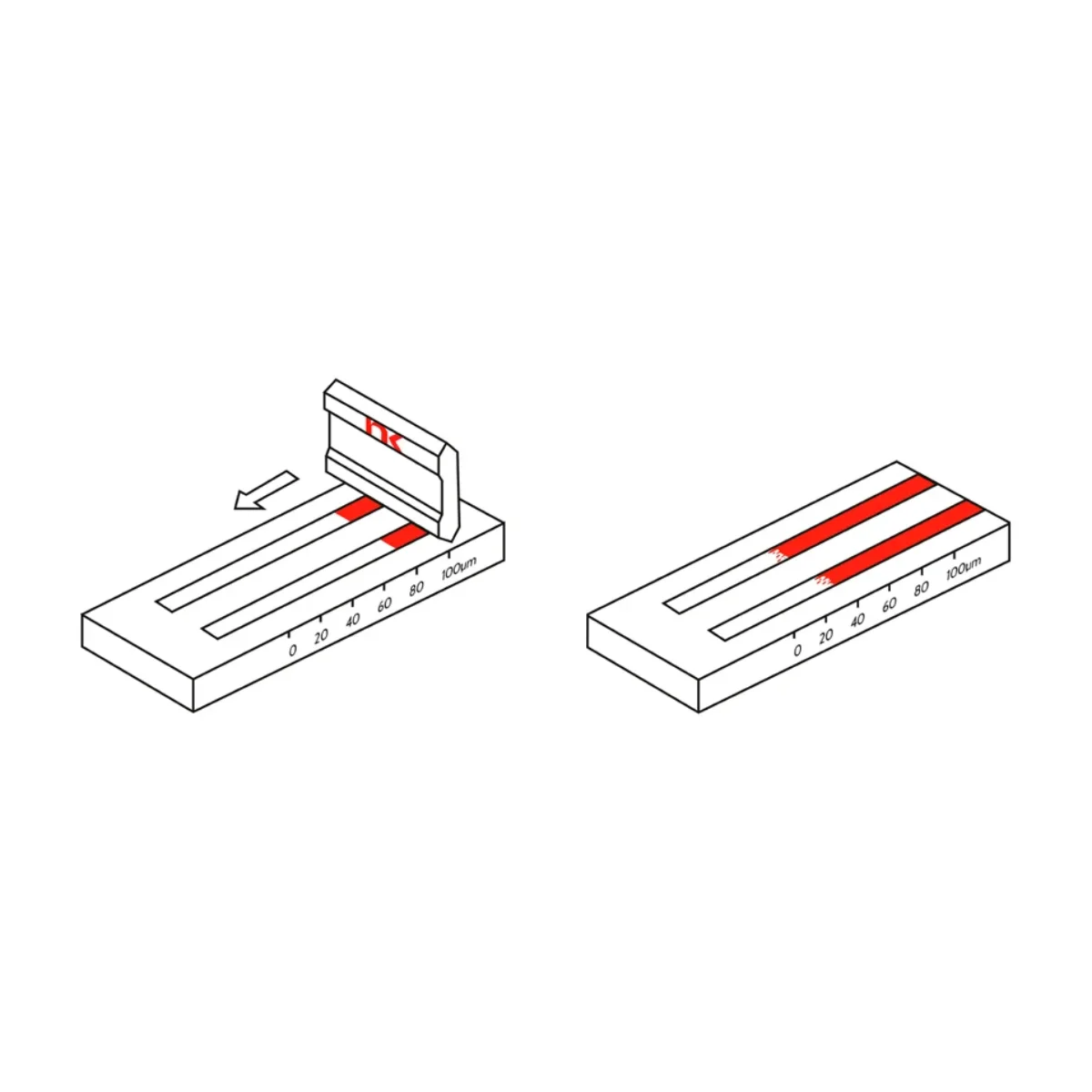
Instrument used to determine the fineness of grind or the presence of coarse particles or agglomerates in a dispersion.
Application
Used to monitor the production, storage and application of dispersion products manufactured by grinding in the paint, plastics, pigments, printing inks, paper, ceramics, pharmaceutical (e.g. creams), food (e.g. chocolate) and many other industries.
Features
Supplied as a single hardened and gauged piece, making it more economical, lighter and more compact.
Made of corrosion-resistant stainless steel. No greasing or special care is required, making it also suitable for use with water-based binders.
All versions also include the Hegman-NS scale graduation, which eliminates erroneous indications of particle fineness.
Available with one or two channels, depending on the selected model.
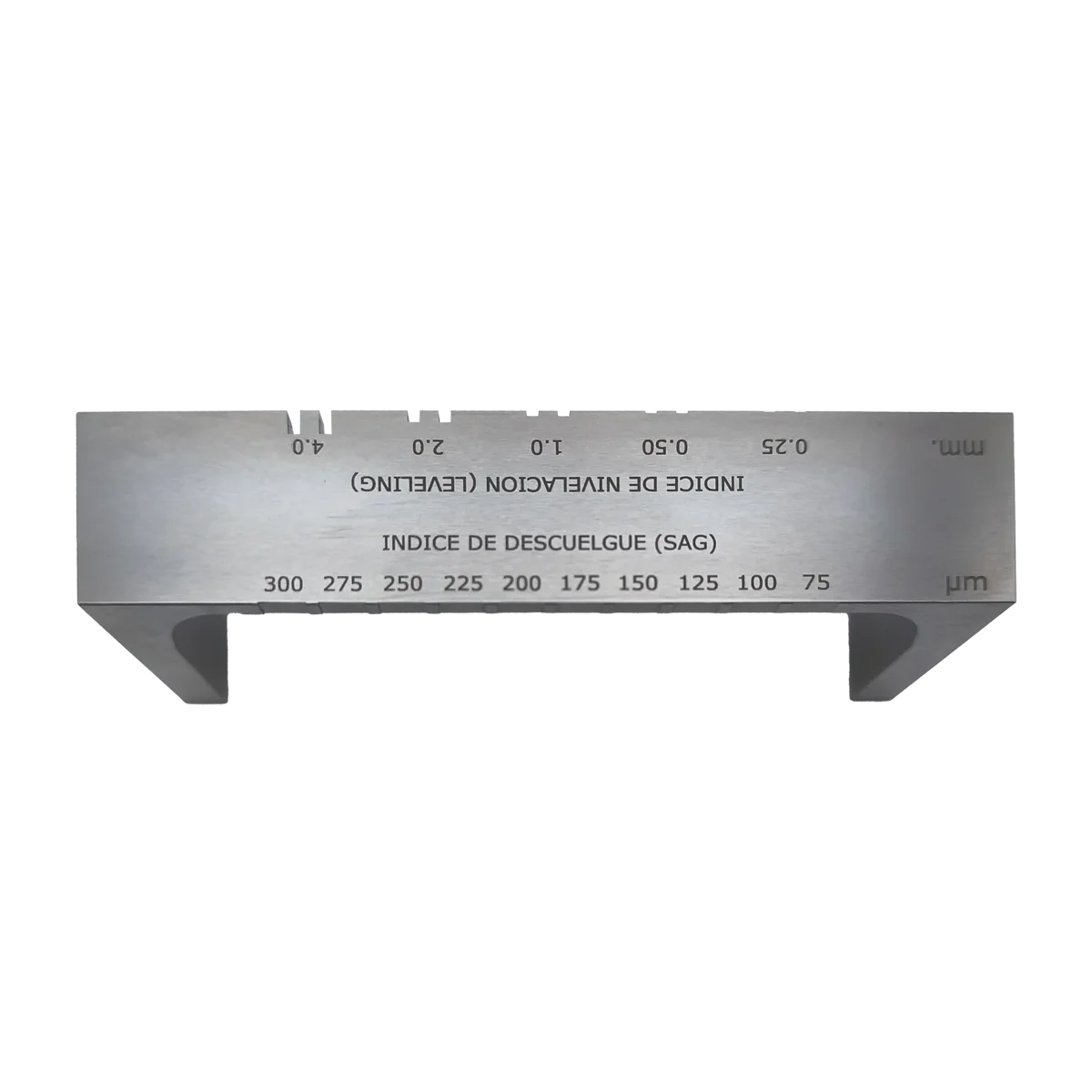
Graduated with Hegman (NS) and micrometric (microns) scales. The scales are engraved on the sides, simplifying cleaning — a wipe with a cloth is sufficient.
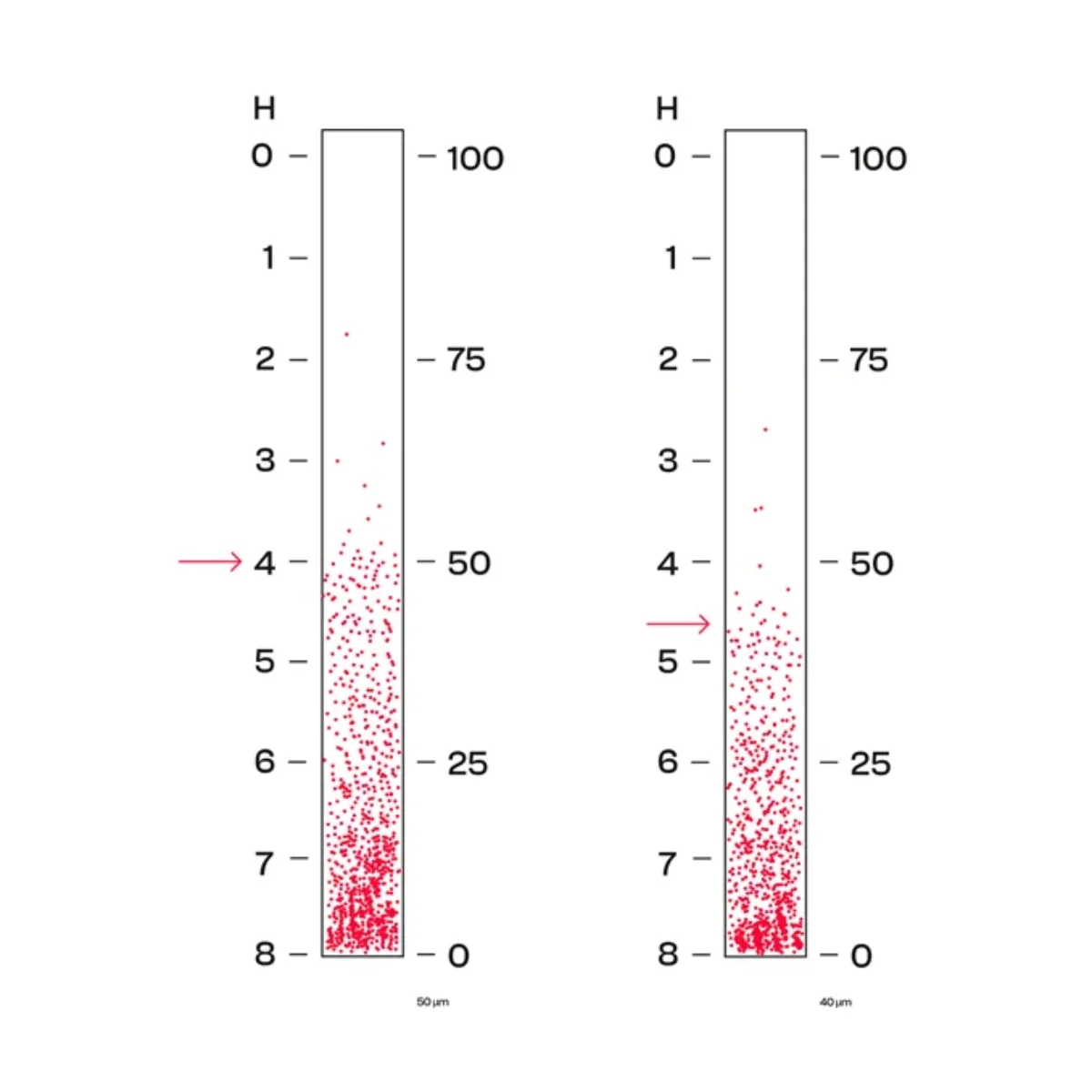
The Hegman “NS” scale on the gauge ranges from 0 to 8, with numbers increasing as particle size decreases:
0 Hegman = particle size of 100 microns
4 Hegman = particle size of 50 microns
6 Hegman = particle size of 25 microns
8 Hegman = particle size of 0 microns
Groove width is 12 mm. Regarding length, two versions are available: standard (channel length 149 mm) and precision (channel length 185 mm).
Why is it important to control the fineness of grinding in a paint?
Poor dispersion can lead to defects such as loss of gloss, colour variations, sedimentation, uneven texture, reduced hiding power or problems during coating application.
Can a paint have good viscosity but poor pigment dispersion?
Yes. Although both parameters are related to product quality, a paint can have the correct viscosity whilst still containing poorly dispersed particles that affect its appearance and performance.
What range of particle sizes can be assessed using the Hegman scale?
Depending on the model, the Hegman scale allows dispersion levels to be assessed, typically ranging from 0 to 8 Hegman, equivalent to particle sizes ranging approximately from 100 µm to less than 15 µm.
How does poor grinding fineness affect the final appearance of a paint?
Poorly dispersed particles can cause visible defects such as surface roughness, loss of gloss, variations in colour tone, reduced hiding power or even stability issues during storage.
We use cookies to personalize content, provide social media features, and analyze our traffic. We also share information about your use of our site with our analytics partners. You can change your preferences at any time. For more information, please see our Privacy Policy and Cookie Policy. Privacy PolicyCookie Policy