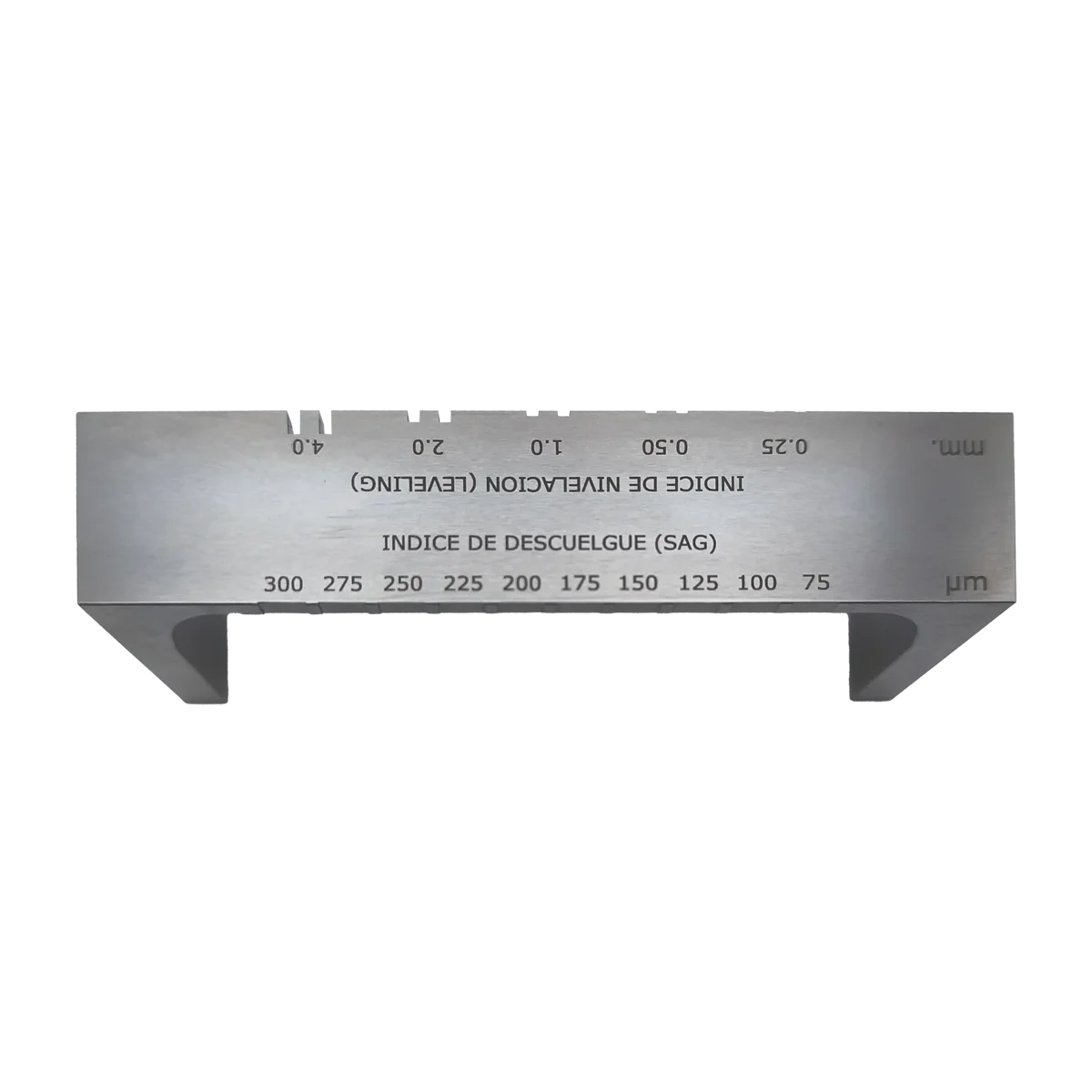
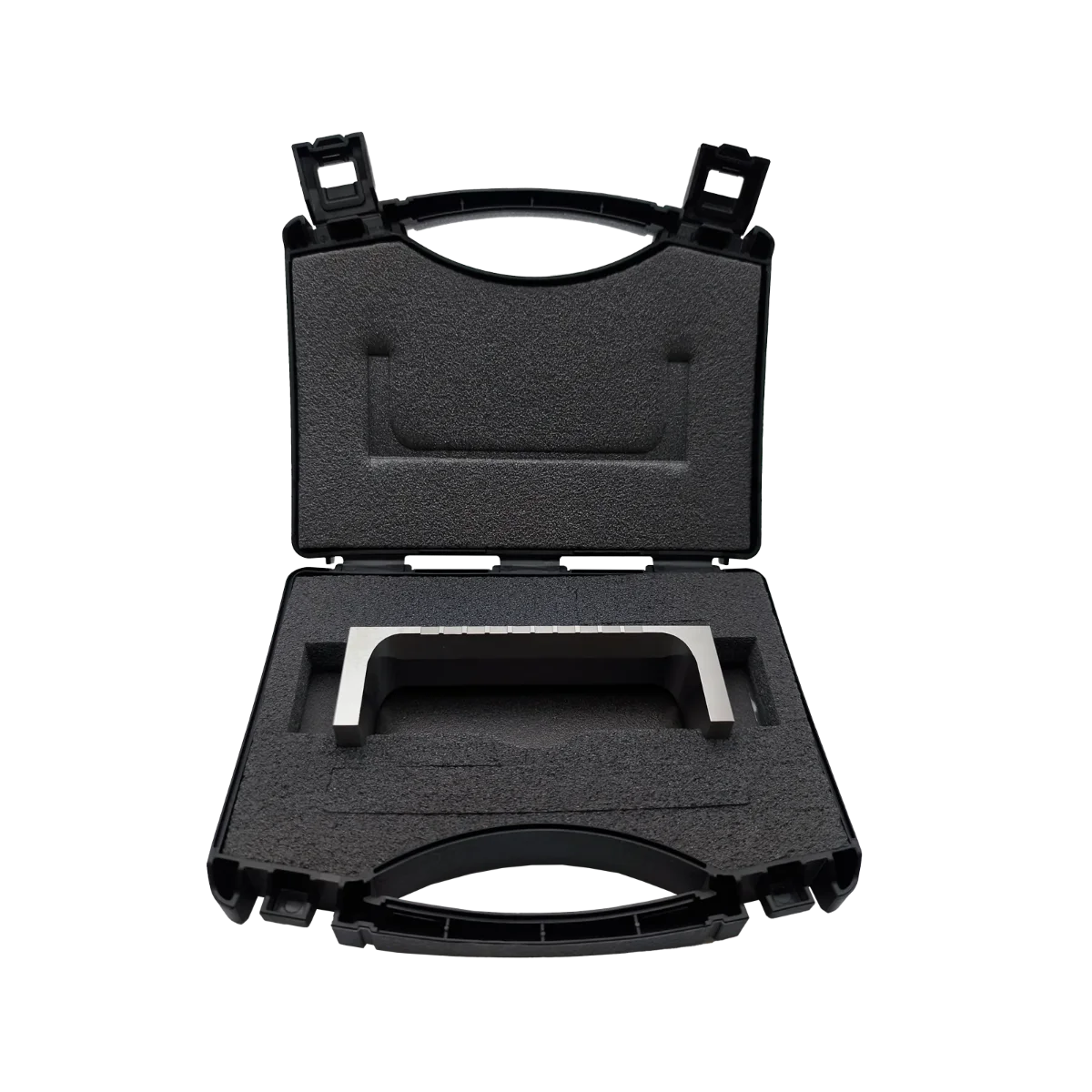
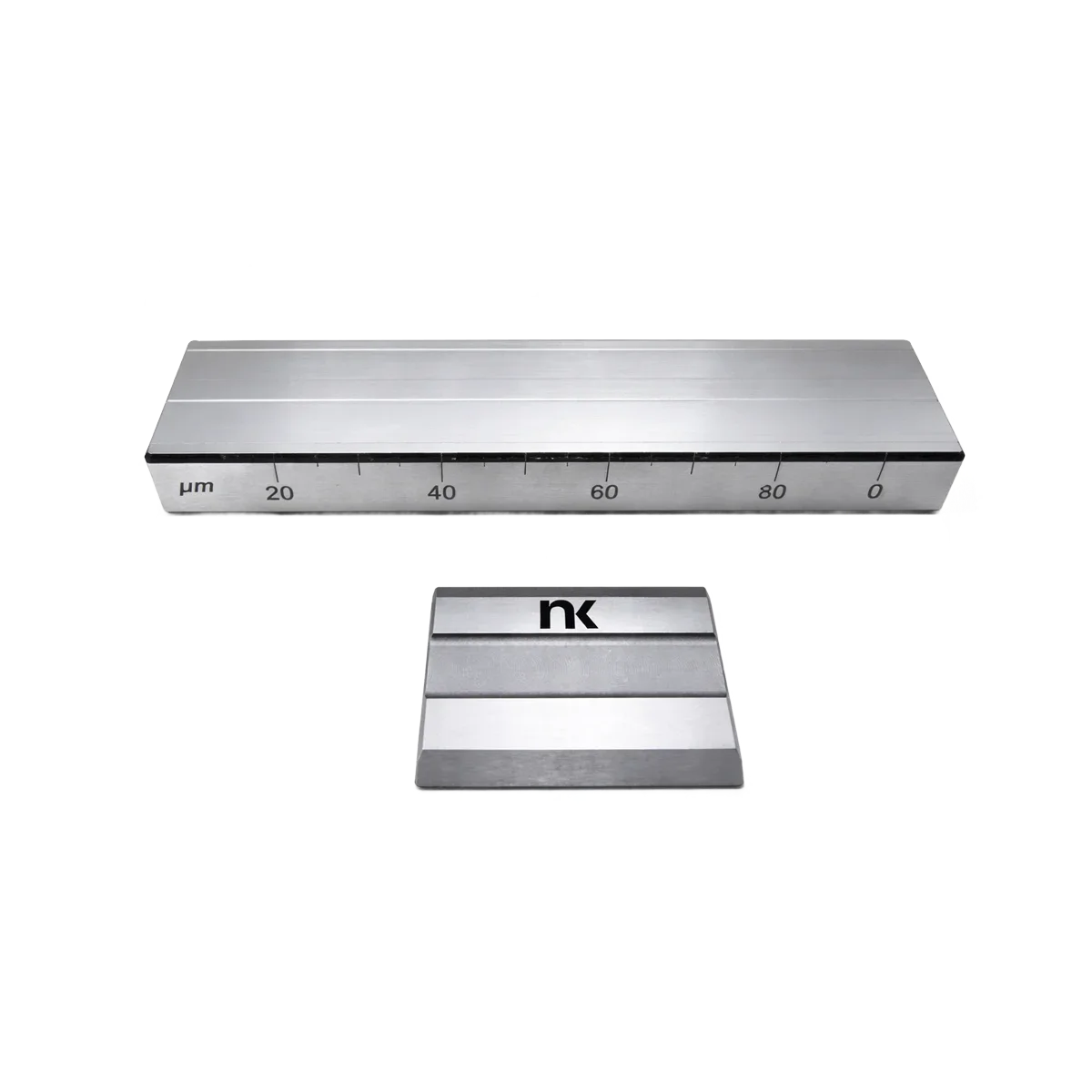
Manufactured in stainless steel with high-precision grinding of all notches.
Application
The Leveling and Sagging Index is a device designed to evaluate two fundamental properties of paints and coatings during application:
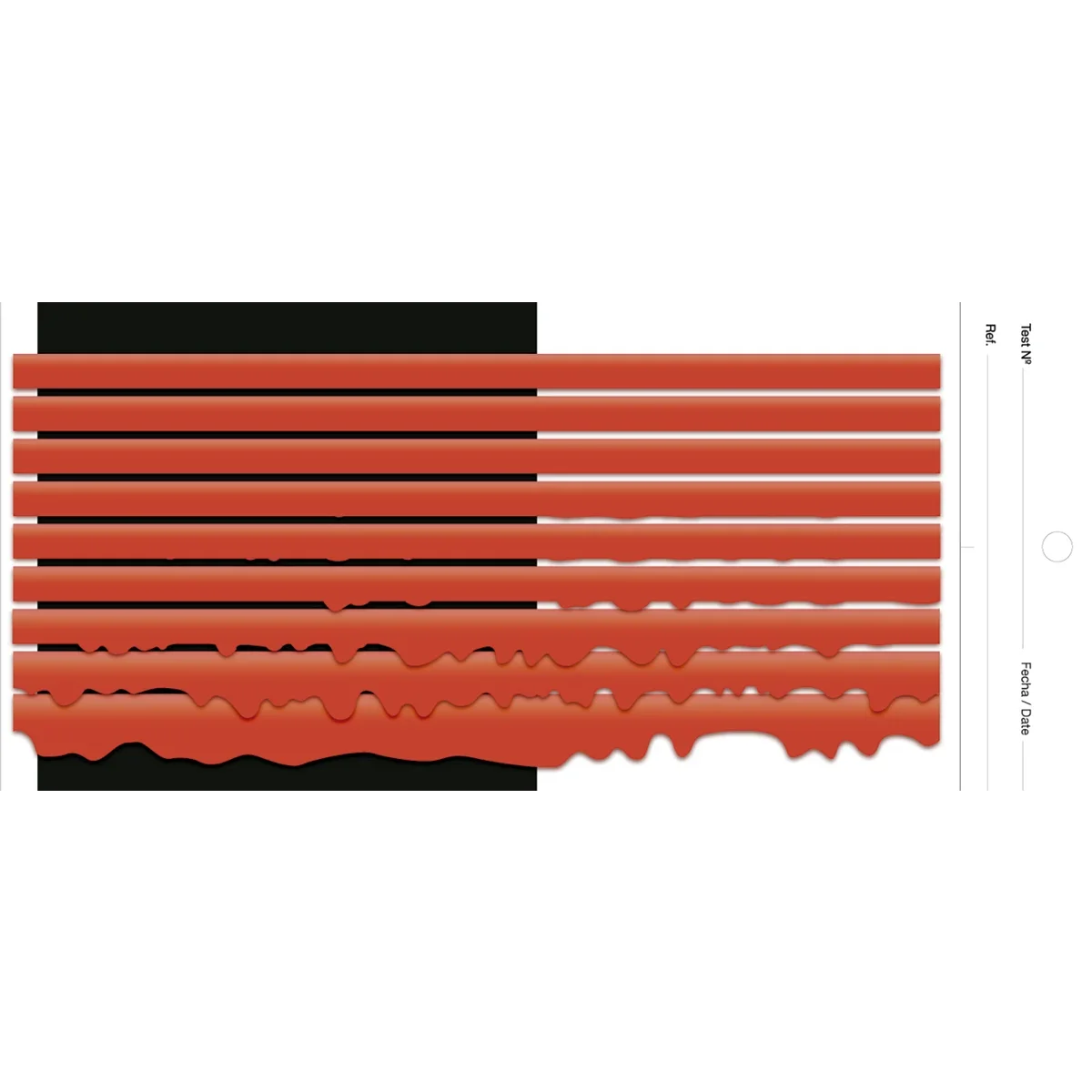
Sag resistance index: ability of a wet paint film to withstand the action of gravity without running or forming sags on non-horizontal surfaces (UNE EN ISO 16862, ASTM D3730 and D4400).
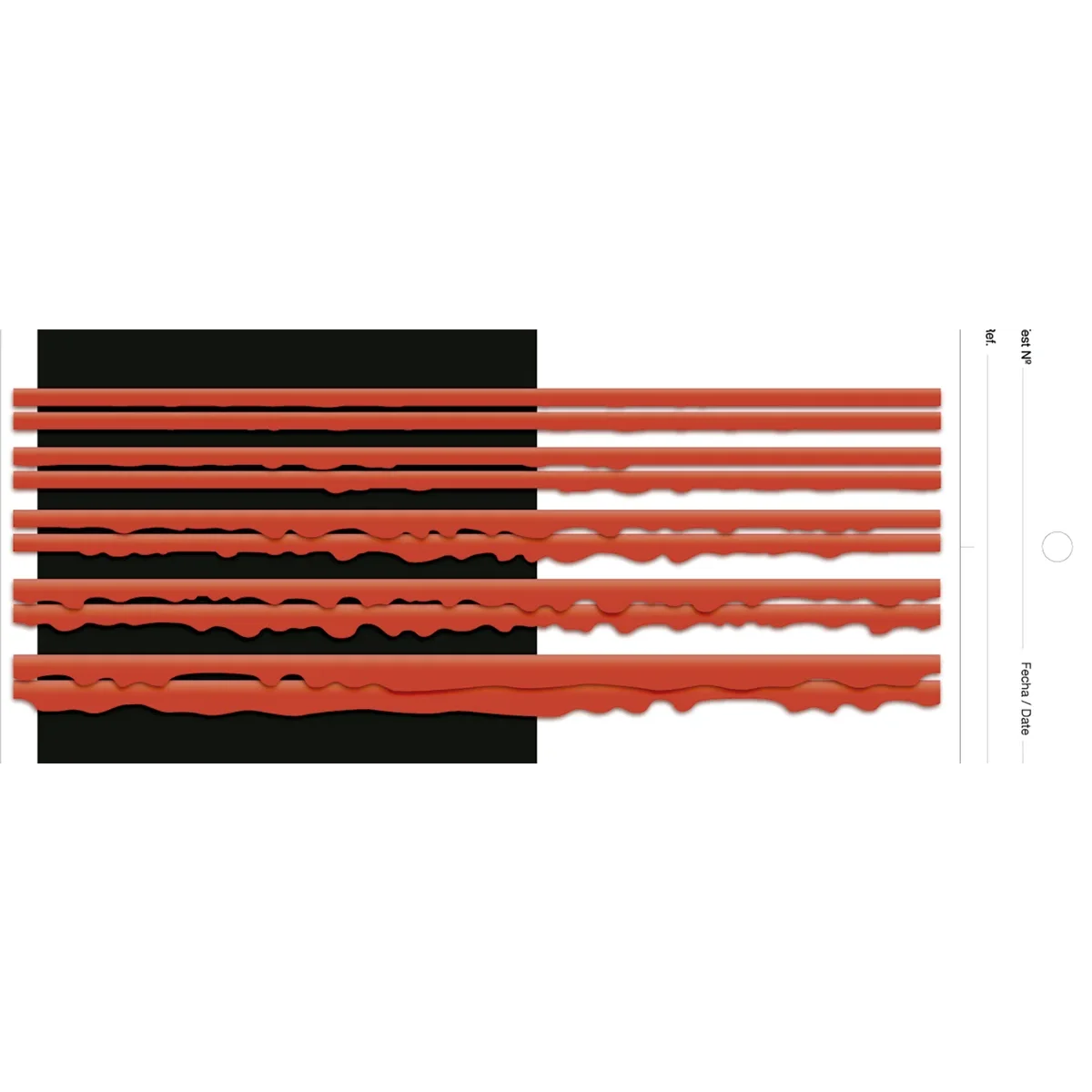
Leveling index: ability of a wet paint film to smooth out and correct irregularities generated during application, achieving a uniform surface (UNE 48043, ASTM D2801).
This instrument allows both tests to be performed with a single applicator, enabling a practical and precise evaluation of leveling and sagging properties.
Features
Made of high-quality stainless steel, corrosion resistant and precision-ground.
Two distinct test zones on a single applicator: one side for the leveling test and the other for the sagging test.
Defined thickness scales:
Leveling: 0.1, 0.2, 0.3, 0.5 and 1.0 mm
Sagging: 75 to 300 µm in 25 µm increments
Robust design, ideal for quick comparative tests between paint formulations or batches.
Standards
UNE EN ISO 16862
UNE 48043
ASTM D2801
ASTM D3730
ASTM D4400
Sagging is a defect that occurs when an excessive amount of paint is applied and the wet film loses stability, causing it to run due to gravity before drying. The result usually manifests as droplets, streaks or accumulations of material.
What is the difference between a sagging problem and an orange peel problem?
Sagging is caused by excessive fluidity and the movement of the wet film, whilst an orange peel finish occurs when the coating does not level properly, resulting in an uneven surface texture.
What factors influence the occurrence of sagging during paint application?
The main factors are the applied film thickness, viscosity, the rheology of the formulation, ambient temperature, the orientation of the surface and drying conditions.
Why might two paints with the same applied thickness behave differently in terms of sagging?
Because the behaviour regarding sagging depends not only on the film thickness, but also on the rheology of the product. Two paints applied at 200 µm or 300 µm may exhibit completely different stability during drying.
We use cookies to personalize content, provide social media features, and analyze our traffic. We also share information about your use of our site with our analytics partners. You can change your preferences at any time. For more information, please see our Privacy Policy and Cookie Policy. Privacy PolicyCookie Policy